My First Cellular Automata
🌱 My First Cellular Automata
A playful, interactive introduction to one of the most fascinating ideas in computer science, mathematics, and artificial life.
✨ What Is a Cellular Automaton?
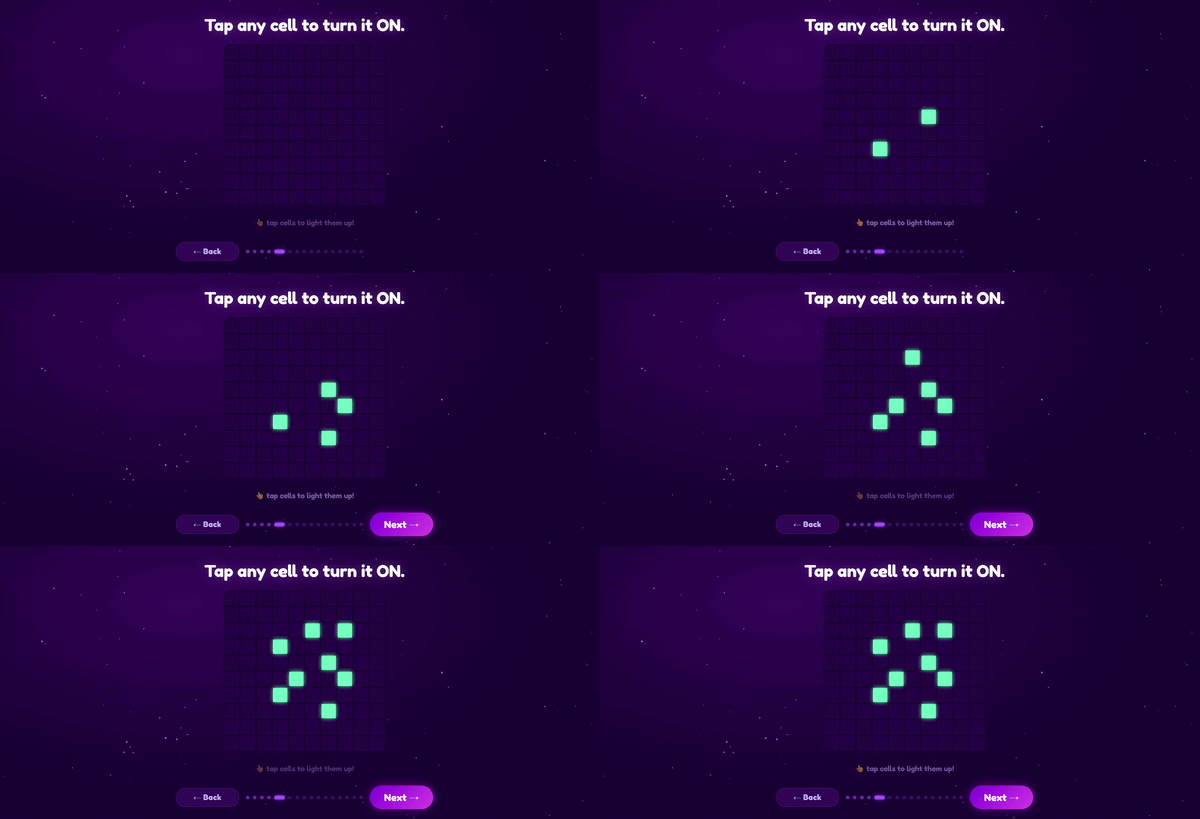
A cellular automaton (CA) is a grid of simple cells that follow a small set of simple rules.
Each cell only looks at its neighbors and decides whether it should turn ON or OFF during the next step.
That’s it.
But when thousands of cells all follow these tiny rules at the same time, surprisingly complex behavior can emerge:
- moving patterns
- self-replicating structures
- stable ecosystems
- endless chaotic motion
- even systems capable of computation
Cellular automata are important in:
- computer science
- mathematics
- complexity theory
- artificial life research
- procedural generation
- physics simulations
- and the study of emergence itself
How To Play
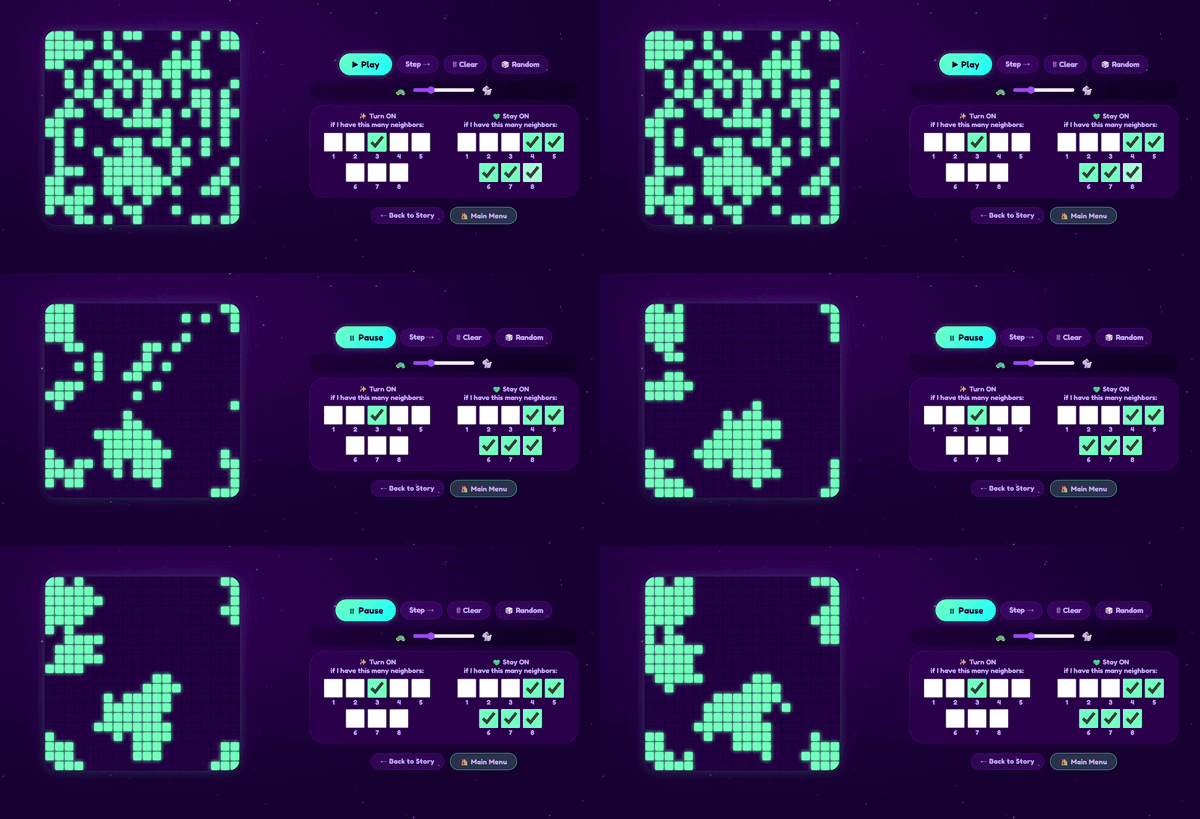
📖 Story Mode
A guided interactive lesson that teaches:
- what cells are
- how neighbors work
- birth and survival rules
- how patterns evolve over time
- and how simple rules can create surprising behavior
🧪 Sandbox Mode
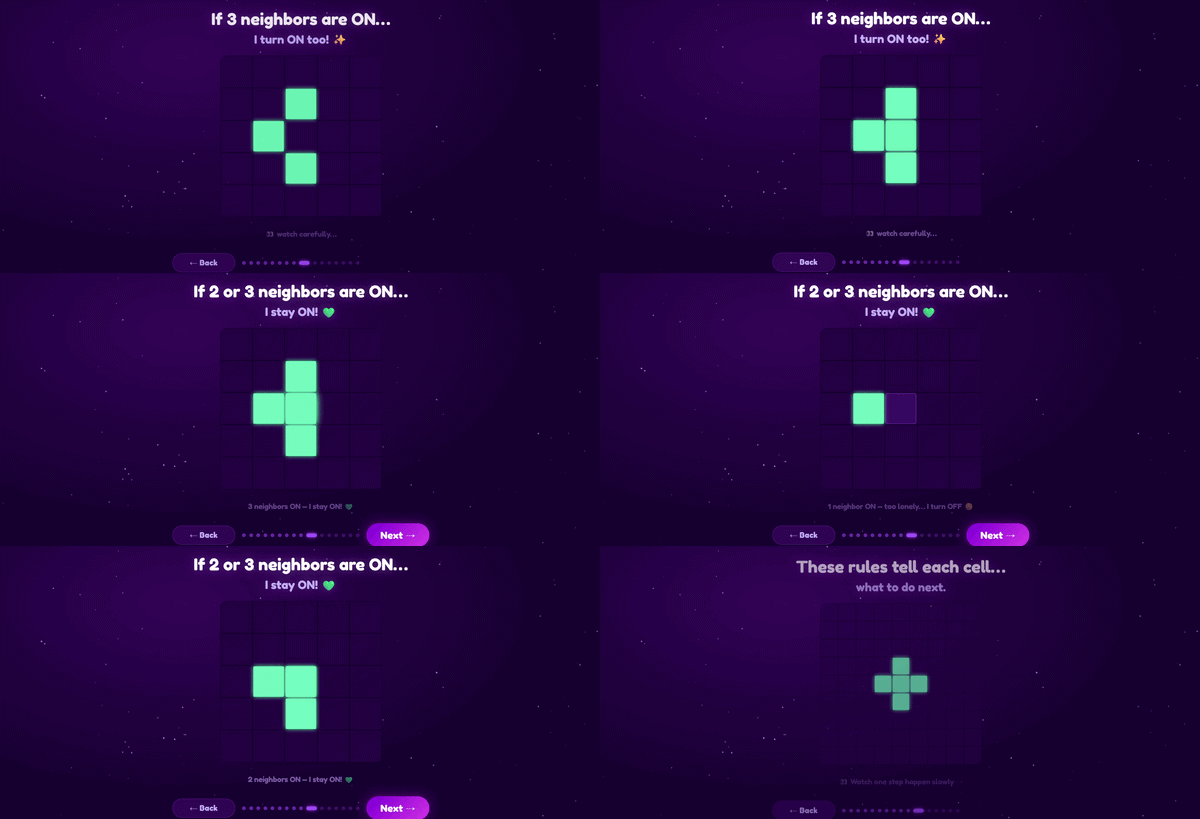
Players can:
- draw their own patterns
- toggle cells ON and OFF
- change the simulation speed
- create custom rule sets
- randomize the world
- pause, step, and observe the simulation frame-by-frame
Rule Sets To Try Together
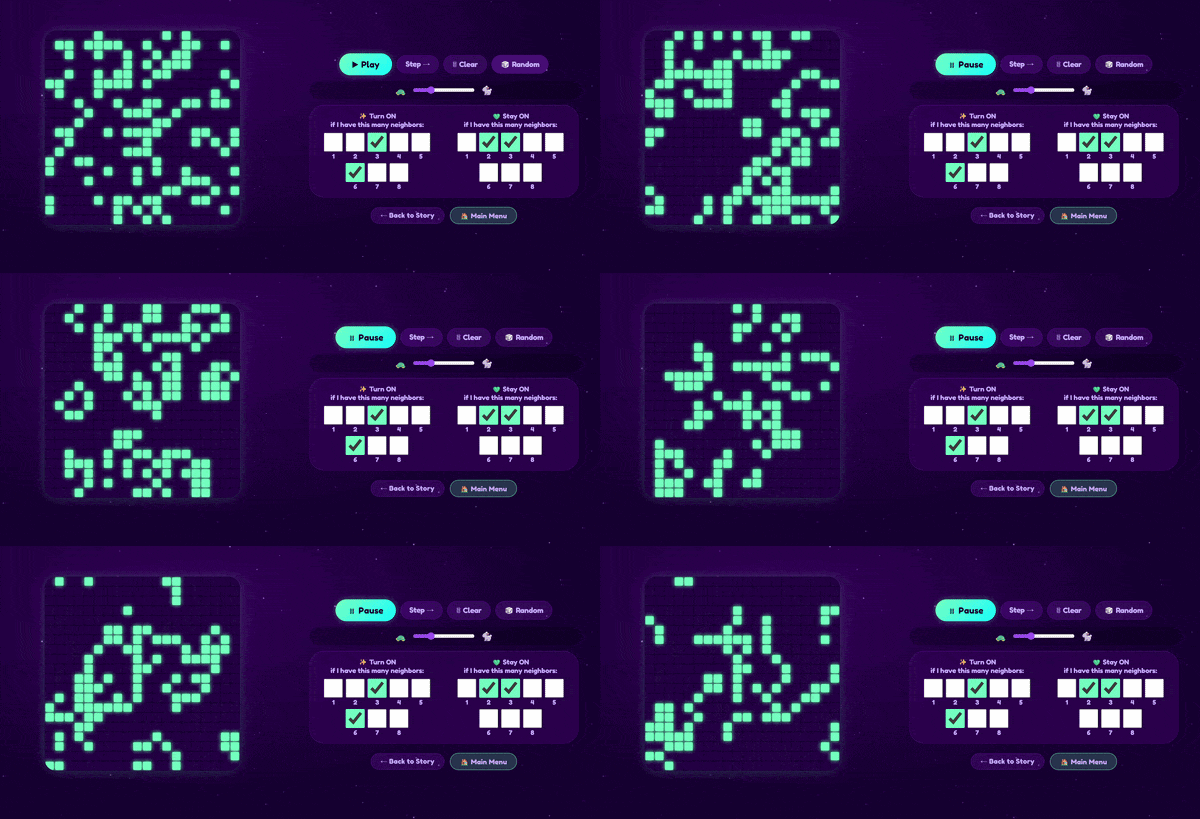
The sandbox lets you create your own cellular automata rules using:
- Birth Rules → what makes cells turn on
- Survival Rules → what makes cells stay on
Rules are usually written in this format:
B3/S23
- Birth (turn on) with 3 neighbors
- Survive (stay on) with 2 or 3 neighbors
That’s the classic Conway’s Game of Life.
Here are some popular rule sets to try:
🌿 Conway’s Game of Life
B3/S23
The classic cellular automaton.
Creates:
- gliders
- oscillators
- spaceships
- stable structures
- chaotic ecosystems
✨ HighLife
B36/S23
Very similar to Conway’s Life, but includes an extra birth condition.
Famous for creating:
- self-replicating patterns
- explosive growth
- surprisingly complex structures
🪸 Coral
B3/S45678
Creates coral-like growths and branching organic structures.
This rule tends to form:
- dense walls
- reef-like textures
- slowly expanding formations
Great for talking about natural growth patterns.
🌗 Day & Night
B3678/S34678
A beautifully balanced rule set where patterns behave similarly whether you invert ON and OFF cells.
Produces:
- shifting symmetrical structures
- stable islands
- flowing formations
🔥 Maze
B3/S12345
Generates winding maze-like corridors.
Fun for:
- map generation
- talking about procedural worlds in games
🌌 Seeds
B2/S
A chaotic rule with no survival.
Every living cell dies immediately, but new ones constantly appear.
Creates:
- fireworks-like expansion
- explosive branching growth
- nonstop motion
👨👩👧 For Parents
This project was designed to encourage:
- experimentation
- systems thinking
- curiosity
- pattern recognition
- computational thinking
- cause-and-effect reasoning
🌱 Made for all the Curious Cats and Kittens
Built as a gentle introduction to emergence, simulation, and complex systems for all ages.
Leave a comment
Log in with itch.io to leave a comment.